
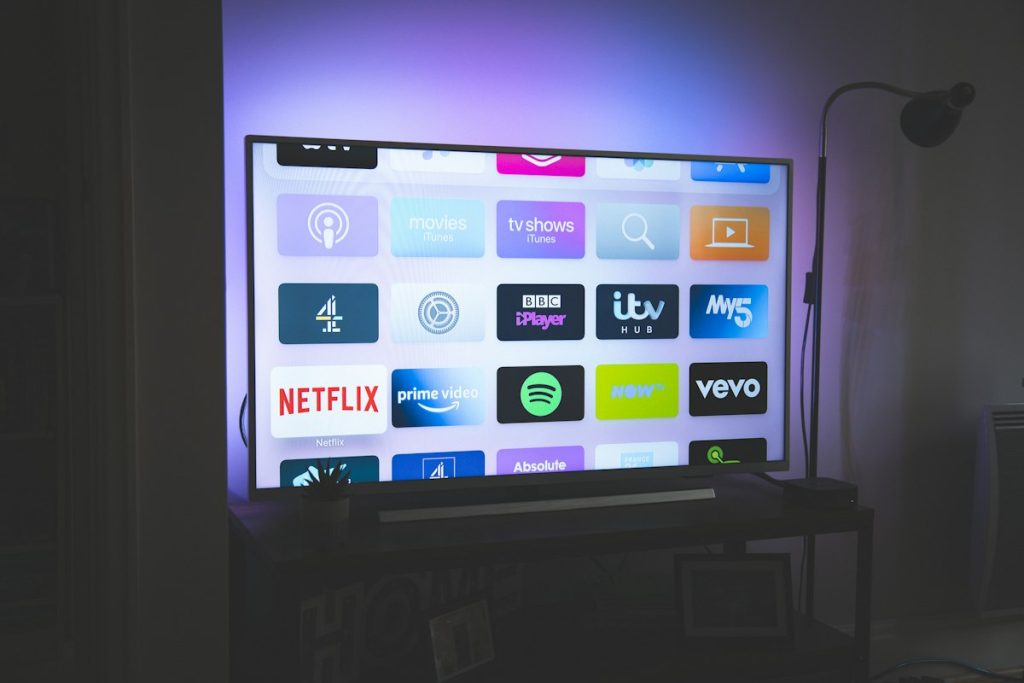
Objective technical analysis, component comparison and real-world performance with no commercial bias, to help you choose the best option for your budget and everyday needs.
Buying a television these days has become a maze of marketing acronyms: OLED, QD-OLED, Mini-LED, QLED, NanoCell, QNED. Behind this advertising avalanche lie two major technology families with radically different optical behaviour: self-emissive panels and LCD panels with advanced backlighting.
Choosing the right screen doesn’t depend solely on resolution (4K is now the absolute standard, while 8K remains unnecessary due to the lack of native content), but rather on the lighting in your room, the type of content you watch and your viewing habits.
1. The four dominant technologies on the market
A) Traditional OLED (LG Display’s WOLED)
In OLED panels, each pixel is made up of organic diodes that emit their own light completely independently. When displaying black, the pixel switches off entirely:
- Strengths: True infinite contrast, absolute pure blacks, perfect viewing angles (the image loses no colour or brightness when viewed from the sides) and near-instantaneous response time (<0.1 ms), which eliminates any motion trail in fast-moving scenes.
- Limitations: Its peak brightness in large windows (100% white screen) is more moderate than on LCD panels due to automatic brightness limiters (ABL). Although modern panels (OLED evo with MLA microlenses) have drastically reduced the risk of burn-in, it still isn’t the ideal choice if you plan to leave news channels with fixed logos running for 10 uninterrupted hours a day.
B) QD-OLED (Quantum Dot OLED from Samsung and Sony)
This is the most cutting-edge evolution of self-emissive technology. It uses a layer of pure blue OLED light that excites quantum dots (Quantum Dots) to generate red and green without any intermediate white colour filters:
- Strengths: It retains all of OLED’s perfect blacks but with visibly superior colour saturation at high brightness (colour volume). The chromatic impact in HDR content is the most spectacular in today’s cinema industry.
- Limitations: A significantly higher price and a subpixel structure that, in first-generation models, could produce a slight magenta tint when hit by direct frontal sunlight.
C) Mini-LED (LCD with microscopic Full Array Local Dimming)
This isn’t a new panel technology, but rather the culmination of the classic LCD panel (from manufacturers such as TCL, Hisense, Sony and Samsung Neo QLED). It replaces traditional backlight LEDs with tens of thousands of tiny diodes grouped into hundreds or thousands of independent dimming zones:
- Strengths: Enormous brightness (1,500 to 3,000 nits) that devours glare in very bright living rooms with large windows. Zero risk of static burn-in and an excellent inches-per-euro ratio in giant formats (65″, 75″, 85″).
- Limitations: No matter how precise the local dimming algorithm is, there is still a slight halo of light (blooming) around bright white elements on a black background (such as subtitles or stars in space). Viewing angles are narrower than on OLED.
D) Entry-level conventional QLED / LED
Standard LCD models with a quantum dot film but peripheral lighting (Edge LED) or with few dimming zones. They are affordable options for tight budgets (under €500), but they lack the contrast control and black depth of the higher-end ranges.
2. Key factors: Gaming, connectivity and operating systems
Beyond the panel itself, check these features before you reach the checkout:
- Full HDMI 2.1 ports: Essential for PS5 and Xbox Series X consoles or PC gaming (they support 4K at 120Hz/144Hz, VRR to avoid image tearing and ALLM to automatically activate low-latency game mode).
- HDR formats: Look for compatibility with Dolby Vision and HDR10+. LG and Sony back Dolby Vision; Samsung continues to do without it in favour of HDR10+.
- Operating system: Google TV offers the most extensive and open app catalogue; webOS (LG) is smooth and nimble with its Magic Remote; Tizen (Samsung) is comprehensive but somewhat more intrusive with ads in its menus.
3. Technical comparison table of display technologies
| Technology | Black Depth | Maximum Brightness | Bright Living Room | Cinema in the Dark | Retention Risk | Relative Price |
|---|---|---|---|---|---|---|
| OLED (WOLED) | Absolute (pixel off) | Medium-high (800-1400 nits) | Good | Unbeatable | Very low in normal use | Medium-high |
| QD-OLED | Absolute (pixel off) | High (1000-1800 nits) | Very good | Absolute reference | Very low in normal use | High |
| Mini-LED | Excellent (with slight blooming) | Maximum (1500-3000 nits) | Unbeatable | Very good | None (0%) | Medium |
| Basic QLED | Modest (greyish in the dark) | Medium (400-600 nits) | Acceptable | Basic | None (0%) | Budget |
«If you watch films and series at night with the lights off, OLED and QD-OLED have no rival. If your living room is a glass-walled, sun-drenched sunroom, or you’re after 75 inches on a sensible budget, Mini-LED is the smart buy.»