
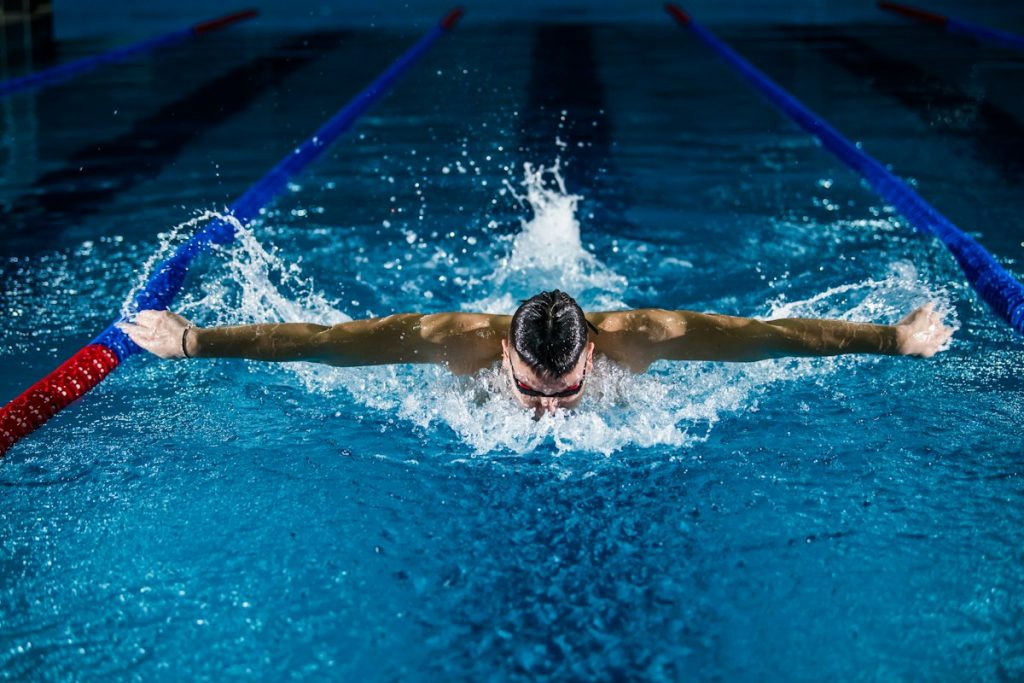
An objective analysis of the fundamentals of this discipline, its physiological adaptations, proven benefits, and which profiles it can offer the most value to.
Immersing yourself in water changes the rules of the body’s physics. Archimedes’ principle of buoyancy reduces the weight your joints bear by up to 90%, making swimming the safest and most complete cardiovascular and muscular exercise for people with joint problems, excess weight, or back pain.
1. The advantages of the aquatic environment
- Zero injurious impact: No pounding against the pavement or axial compression on the spine.
- Constant three-dimensional resistance: Water is about 800 times denser than air; every stroke and kick demands concentric muscular effort throughout the entire range of motion.
- Breathing control and the rib cage: The pressure of the water against the chest forces the inspiratory muscles to work with greater intensity, improving vital lung capacity.
- Venous return: Hydrostatic pressure helps the blood circulate from the legs back to the heart.
2. Who benefits most?
- People with severe excess weight or osteoarthritis of the knee and hip.
- People recovering from sports injuries or surgical procedures.
- Those who suffer from asthma or bronchial hyperreactivity, thanks to the warm, humid environment of heated pools.
The Trebellos verdict
Swimming is a balm for the joints and a formidable form of cardiopulmonary conditioning. While on its own it does not generate the impact needed to increase bone density (which requires weight-bearing work on land), it is one of the healthiest and most relaxing activities for taking care of your heart and back at any age.