
This article is part of our series of objective nutritional analyses, contrasting the biological evidence with popular claims.
The rise of plant-based eating and flexitarianism has transformed restaurant menus and supermarket shelves in recent years. Motivated by animal welfare, a smaller ecological footprint, or improved cardiovascular health, millions of people have decided to shift plant-based products to the absolute center of their plate.
However, on this green journey a contradictory phenomenon has emerged: the food industry has seized on the «vegan» label to market ultra-processed products loaded with refined starches, hydrogenated fats, and flavor enhancers. How can you build a truly nutritious plant-based diet without exclusionary dogma?
1. Plant-Based vs. Vegan: The Crucial Difference
The terms are often used interchangeably, but they represent different concepts:
- Veganism: An ethical and philosophical stance that rejects any form of exploitation and use of animals (in food, clothing, cosmetics, and entertainment). A person can be a strict vegan while living on bagged potato chips, cola drinks, and industrial veggie burgers.
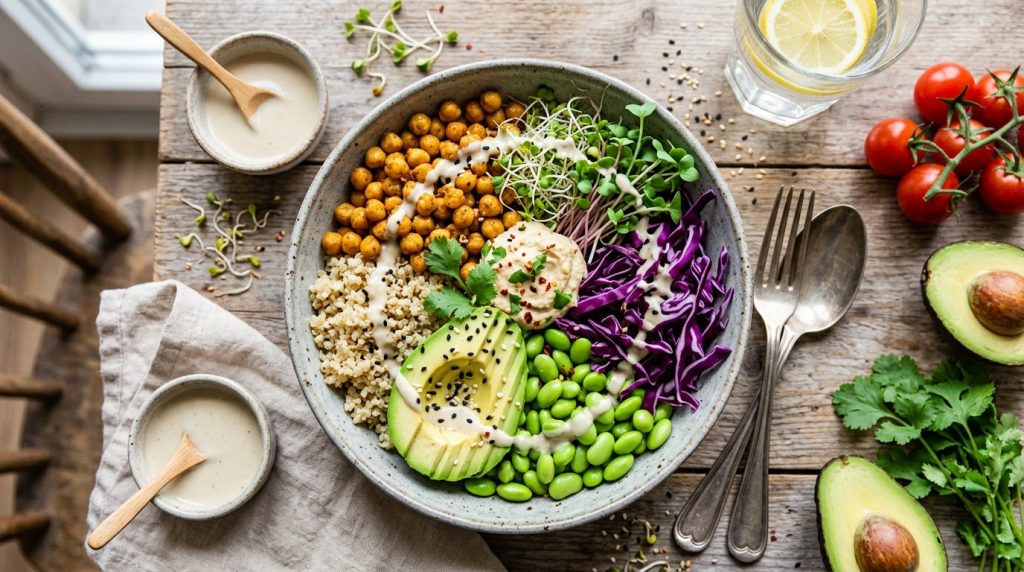
- Plant-Based Eating (Whole Food Plant-Based): A nutritional approach based on whole, unprocessed or minimally processed foods of plant origin: legumes, whole grains, vegetables, fruits, tubers, nuts, and seeds.
- Flexitarianism: This means adopting a plant-based foundation for 85% or 90% of daily meals, reserving the consumption of top-quality fish, meat, or eggs for occasional moments, without rigidity or absolute exclusions.
2. The Big Trap: Junk Food With a Green Label
The greatest risk for those who decide to «eat greener» today lies in replacing real animal foods with ultra-processed, lab-made substitutes:
Vegan «cheeses» made from modified starch and hydrogenated coconut oil, without a single gram of protein or calcium; plant-based «nuggets» or «sausages» packed with gums, refined flours, and exorbitant amounts of sodium. The fact that a product contains no ingredients of animal origin does not automatically make it nutritious. The foundation of your menu should be food that grows from the earth, not food that comes out of a factory on a plastic tray.
«Eating plant-based means eating lentils, chickpeas, spinach, and walnuts; it does not mean buying ultra-processed meat imitations that try to mimic textures using industrial additives.»
3. The Non-Negotiable Pillars of a Healthy Plant-Based Diet
For a predominantly or entirely plant-based diet to be optimal on a physiological level, it must meet these three fundamental requirements:
- Mandatory Vitamin B12 supplementation: Anyone who eliminates animal foods should take weekly cyanocobalamin vitamin B12 on Amazon. To support protein intake, vegan protein powder (Vegan Blend) at Myprotein (code DAVID-R495F) is a practical resource, or methylcobalamin on a regular basis. There are no reliable, biologically active plant sources of B12. A deficiency causes megaloblastic anemia and irreversible neurological damage.
- A variety of quality protein: Combining legumes (chickpeas, beans, lentils, soy and its traditional derivatives such as tofu or tempeh), whole grains (quinoa, oats, spelt), and seeds (hemp, pumpkin) ensures a complete supply of essential amino acids.
- Attention to iron, zinc, and omega-3: Consume sources of non-heme iron (lentils, spinach) together with vitamin C (citrus fruits, peppers) to multiply their absorption, and ground flax or chia seeds to provide plant-based ALA.
4. Comparison Table: Approaches Within the Plant-Based Universe
| Model | Main advantage | Main challenge | Lifelong sustainability |
|---|---|---|---|
| Ethical vegan | Total moral consistency | Requires planning and supplementation | ⭐⭐⭐ Moderate |
| Whole Food Plant-Based | Elite cardiovascular and metabolic health | Demands home cooking and avoiding processed foods | ⭐⭐⭐⭐ High |
| Flexitarian | Maximum social and nutritional flexibility | Maintaining plant-based consistency | ⭐⭐⭐⭐⭐ Outstanding |
The Trebellos Verdict
Increasing the presence of legumes, vegetables, fruits, and seeds on your plate is one of the smartest and most beneficial decisions anyone can make for their health and for the environment. The flexitarian model offers the best of both worlds: the protective richness of plants combined with the peace of mind of not living under the scrutiny of rigid, inflexible rules. Fill your plate with color, cook real food, and forget about commercial labels.
Transparency notice: This article contains recommendation links affiliated with affiliate programs (Amazon and Myprotein). As an Amazon Associate, I earn from qualifying purchases. If you decide to purchase any product through these links, this site may receive a small commission at no additional cost to you, helping to support the project’s technical outreach.