
An anatomical and functional analysis comparing classic bodyweight floor work (Mat) with the Reformer’s progressive spring-resistance system. Benefits for spinal conditions, strengthening the lumbo-pelvic core, and how to choose based on your level.
Created in the early 20th century by Joseph Pilates under its original name of Contrology, this physical conditioning method has become one of the most widely prescribed tools in physiotherapy, sports medicine, and functional rehabilitation. However, with the rise of specialized studios, the most common question for anyone deciding to get started is: Mat Pilates or machine Pilates (Reformer)?
Although both share the six fundamental principles of the method (concentration, control, centering or powerhouse, flow, precision, and breathing), the biomechanical environment in which the body operates is radically different, as we already introduced in our analysis of Pilates for core control and postural re-education.
1. Mat Pilates (Matwork): The Challenge of Pure Gravity
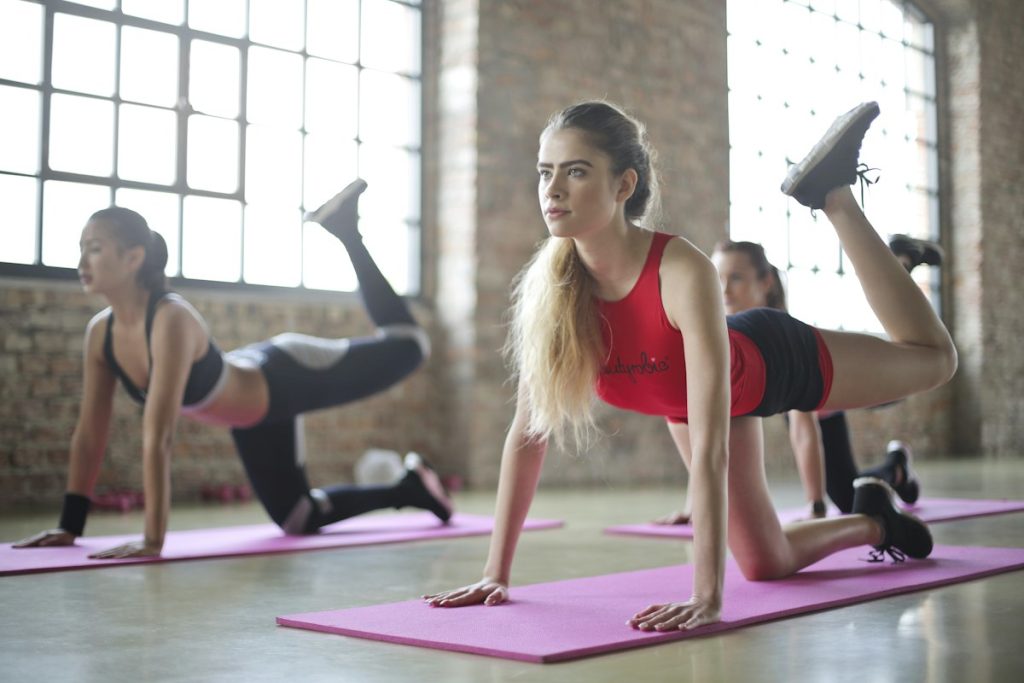
There is a widespread myth that mat Pilates is a “gentle” version or one meant for beginners. Biomechanically, exactly the opposite is true: on the mat, your only support is your own body, and the constant resistance is the force of gravity.
Classic exercises such as The Hundred, the Teaser, or the Roll Up demand an extraordinary level of strength in the transversus abdominis, the obliques, and the iliopsoas to hold the weight of the legs and torso in the air without arching the lower back or overloading the neck flexors. On the mat, there are no springs to assist you if you lose motor control.
2. Reformer Pilates: Mechanical Assistance and Progressive Resistance
The Reformer is a moving platform (carriage) that slides along rails via a system of springs of varying tension, pulleys, and straps. This design offers an incomparable twofold biomechanical advantage:
- Assistance in rehabilitation: For people with acute lower-back pain, herniated discs, or marked muscle weakness, the springs reduce the impact of body weight and guide the plane of movement, allowing the stabilizing muscles to be exercised without subjecting the spine to axial compression.
- Variable eccentric resistance: For experienced athletes, adding high-resistance springs turns the Reformer into pure strength training with an emphasis on controlled eccentric contraction—key to protecting the tendons and gaining joint stability (perfect for complementing weight-based strength training).
3. Comparison Table: Mat vs. Reformer
| Parameter | Mat Pilates | Reformer Pilates (Machines) |
|---|---|---|
| Resistance | Bodyweight and gravity (accessories: ring, bands, foam roller). | Calibrated springs, pulleys, and a sliding carriage. |
| Motor Control Required | Very high (the body must self-stabilize without external guidance). | Guided by the rails (assists or challenges depending on the setup). |
| Range of Motion | Limited by the mat. | Greater elongation and three-dimensional joint decompression. |
| Injuries and Rehabilitation | Requires adaptations to avoid lumbar hyperextension. | Ideal for lower-back pain, hernias, and post-surgical joint recovery. |
| Cost and Accessibility | Affordable; can be practiced at home or in large groups. | More expensive (one-on-one sessions or small groups of 4–6). |
| Main Focus | Isometric core strength and proprioception. | Biomechanical alignment, dynamic stretching, and eccentric strength. |
4. Which Should You Choose Based on Your Personal Goals?
- Choose the Reformer if: You suffer from chronic back pain or lumbar hernias, are recovering from a joint injury, or are seeking deep elongation and postural work guided by a specialized instructor.
- Choose Mat Pilates if: You have a healthy physical foundation, want to master control of your core without relying on machinery, and are looking for a discipline you can perform anywhere or integrate into your routine after running sessions.
- The ideal combination: Alternating one weekly Reformer session to align the spine and work on deep mobility with one or two Mat sessions to consolidate intrinsic core strength.
The Trebellos Verdict
No form of Pilates is superior to the other: they are two sides of the same biomechanical coin. The Reformer teaches your nervous system correct movement patterns through the assistance of the springs; the mat tests whether your body has truly learned to support itself against gravity.